Tontines are one of the world’s oldest and most enduring wealth management strategies, using longevity riskLongevity risk is the risk that you live so long that your savings run out. Research shows that between 60-70% of savers at, or near, retirement fear running out of money in old age more than dying. pooling to generate gains beyond asset performance alone.
Tontines provide lifetime monthly distributions to members for as long as they remain alive.
When members pass away, their unused assets stay within the tontine and are redistributed among surviving members, enhancing their future distributions over time.
While this concept may seem novel at first glance, tontines have been widely used for centuries by mainstream savers for a simple reason:
by pooling longevity risk, tontines enable members to afford a higher standard of living throughout their lifetime than would typically be possible if they held the same assets outside of a tontine.

What is a Tontine?

How safe are Tontines?
The safest and most highly regarded pension systems in the world — including those in Sweden, Iceland, the Netherlands, and Denmark — rely on tontine-style longevity risk pooling to help provide sustainable lifetime retirement income. These systems are overseen by professional trustees and fiduciaries who are required to act in the best interests of their members.
Tontine Trust was founded in 2017 with the mission of making modern trustee-managed tontines accessible to savers worldwide.

What if I want my children to receive an inheritance?
Each Tontine Trust is designed to provide lifetime income security for a single member, meaning the assets contributed to the trust remain dedicated to supporting that member throughout their lifetime rather than passing to family through their estate.
Families wishing to provide long-term financial security for future generations can establish separate Tontine Trusts for each child or family member, helping provide them with sustainable lifetime income that cannot be outlived.

Why would I choose a Tontine over an Annuity?
Historically, up to 5 times more savers chose tontines over annuities because tontines can provide higher lifetime income and a higher standard of living throughout retirement.
Rather than paying an insurance company to guarantee fixed payments, tontines allow members to pool longevity risk together directly. This simpler structure reduces costs and allows more of the asset returns and longevity gains to remain with members.
In exchange, members understand that distributions will adjust over time based on asset prices and member longevity.

Where does the higher income come from?
The higher income generated by a tontine comes from longevity risk pooling. When members of the tontine pass away, the assets that were supporting their future distributions remain within the tontine and are redistributed among surviving members rather than being part of the general estate.
As a result, surviving members benefit not only from the returns generated by the underlying assets, but also from longevity gains created through the collective sharing of longevity risk.

Who governs the Tontine?
Each Tontine Trust is professionally governed by independent trustees and fiduciaries whose responsibility is to act in the best interests of members. Trustees oversee the assets, ensure distributions are administered fairly, and help protect the long-term sustainability of the tontine.
Tontine Trust Europe KB, authorised in Sweden as a Trust management company, provides trustee-managed tontine structures established under the laws of well-established international trust jurisdictions that impose strict fiduciary duties and safeguards on trustees.

Why not just live off passive income from investments?
Traditional passive income strategies rely solely on investment returns such as dividends, interest, or rent.
Individuals managing their own assets must also spend cautiously because they do not know how long they will live and are entirely dependent on investment returns to maintain their lifestyle.
Tontines enable sustainable lifetime income by combining the dual benefits of asset returns and longevity gains.
This additional source of value supports higher sustainable lifetime income and a higher standard of living than would typically be possible outside a longevity pool.

Where did Tontines come from?
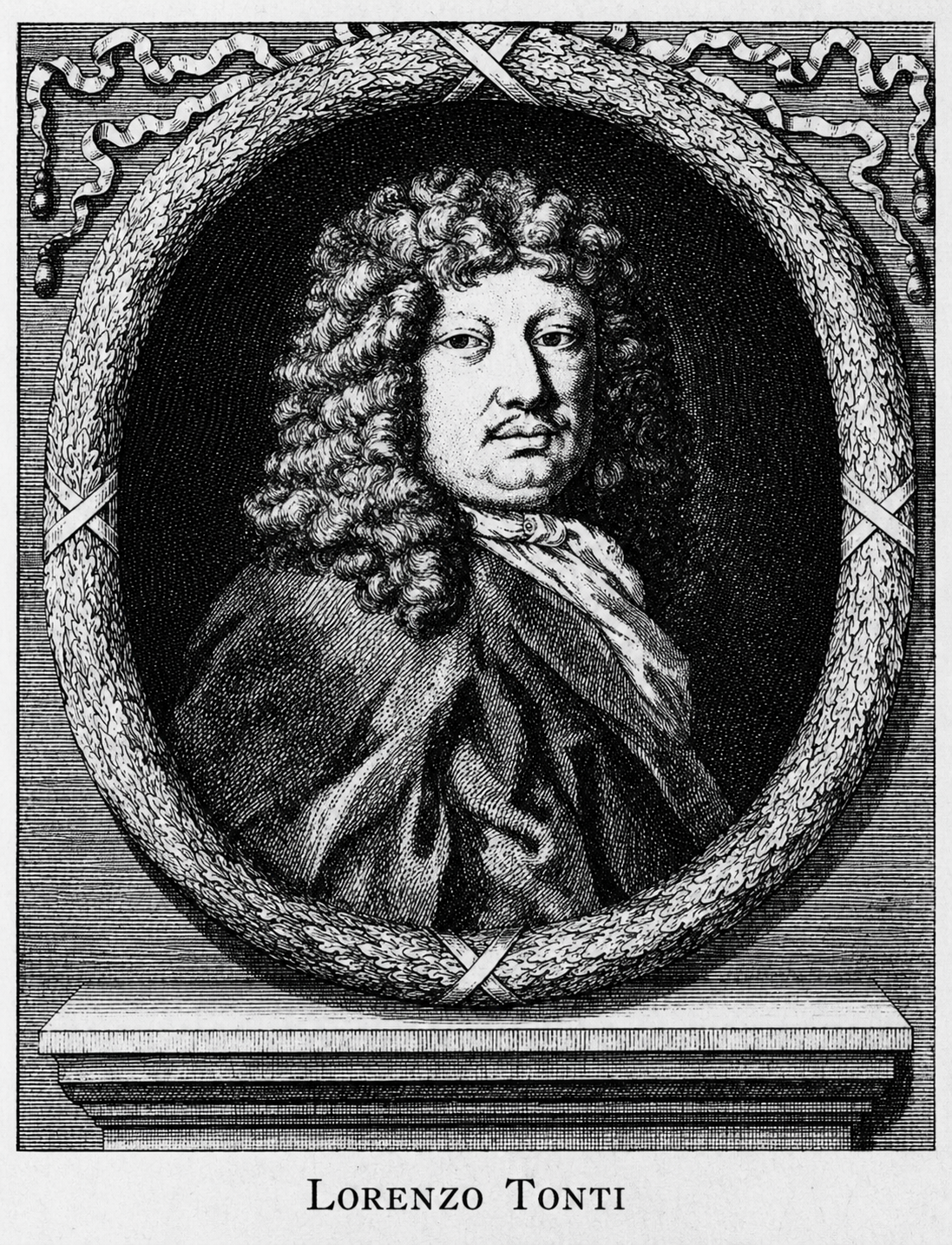
Tontines are named after Lorenzo de Tonti, a 17th-century Italian banker who helped popularise the idea of pooling money together to provide lifetime income through longevity risk sharing.
First introduced in Europe during the 1600s, tontines were widely used by governments, pension systems, and private savers for centuries because they allowed members to generate higher sustainable lifetime income by combining investment returns with longevity risk pooling.

What modern tontines exist today?
Tontines continue to exist today primarily through some national pension systems that use longevity risk pooling to help provide sustainable lifetime retirement income.
Tontine Trust Funds are the first modern internationally accessible tontines designed for savers of all ages seeking passive lifetime income beginning at any stage of life.
As a result of modernised retirement and pension regulations, Tontine Pensions, including the TontineIRA®, will soon be available in many OECD countries which are seeking more efficient retirement solutions for savers in need of lifetime incomes.